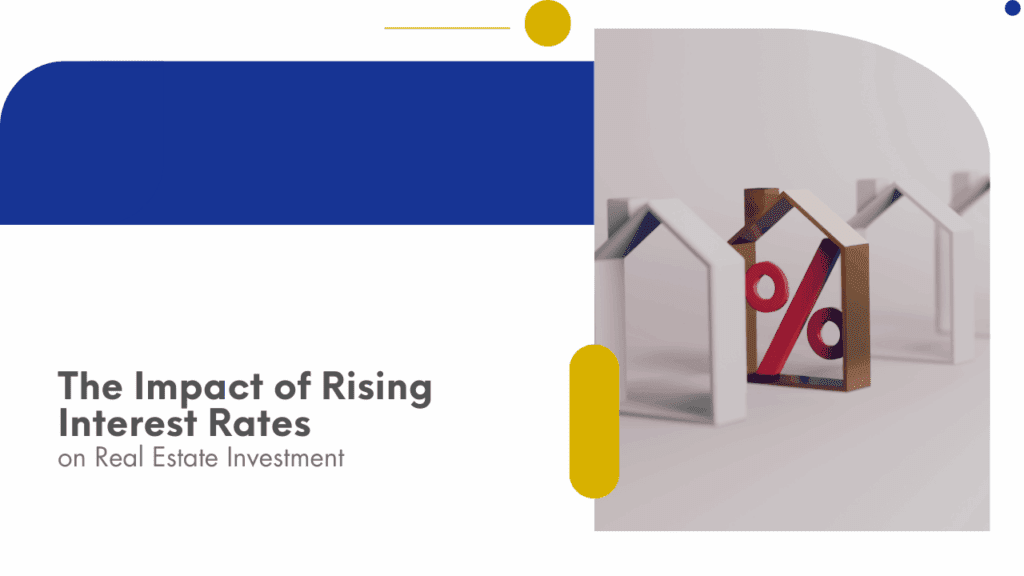
 What happens to real estate investment strategy when the cost of borrowing, buying, and improving becomes significantly more expensive?
Quick Summary:
|
For Washington state real estate investors and rental property owners, rising interest rates are a defining market force reshaping acquisition decisions, financing structures, cash flow expectations, and long-term portfolio planning.
But wait, isn’t the Fed cutting those rates pretty consistently these days?
Yes. Interest rates have trended downward over the last month or two as the Federal Reserve cut its benchmark rate, leading to lower mortgage rates and other borrowing costs, though the path remains data-dependent, reflecting cooling inflation and economic conditions. Mortgage rates, like the 30-year fixed, have fallen to around 6.22% in early December, down from levels near 6.32% in late November, signaling relief for homebuyers despite mixed market signals.
These interest rates are still higher than most real estate investors probably remember.
After more than a decade of historically low borrowing costs, the rapid shift to a higher-rate environment a couple of years ago has altered the fundamentals that many investors once took for granted. The effects remain, even as interest rates are falling little by little.
Interest rates influence far more than monthly mortgage payments. They directly affect property valuations, buyer demand, capitalization rates, and the overall velocity of transactions. In Washington’s diverse real estate landscape, these effects are uneven but unavoidable. Investors relying on leverage must now reassess deal viability with tighter margins, while sellers face a smaller, more selective pool of qualified buyers.
For rental property owners, higher rates intersect with other Washington-specific dynamics, including rent growth trends, regulatory considerations, and operating cost pressures. While strong employment numbers and persistent housing shortages continue to support long-term demand, the path to profitability has become more sensitive to financing terms and execution. Cash flow analysis, debt structure optimization, and hold-versus-sell decisions now require greater precision.
At the same time, existing interest rates can create opportunity. Reduced competition, motivated sellers, assumable loans, and creative financing strategies are emerging as critical tools for investors willing to adapt. Understanding how interest rates ripple through Washington’s real estate market is essential for protecting existing investments and identifying where strategic advantages still exist.
As your Real Estate Gladiators, our job is to protect your investments and fight back against surprises that may have a negative bearing on your earnings. We’re investigating how interest rates are impacting real estate investment across Washington State and what informed investors and rental property owners can do to respond effectively in this evolving environment.
Let’s Look at Interest Rates

Interest rates play a central role in determining the cost and feasibility of real estate investment, particularly for investors who rely on financing to acquire or refinance property. At a fundamental level, interest rates represent the price of borrowing money. When rates rise, lenders charge more for the use of capital, increasing monthly debt service, total interest paid over the life of a loan, and the income a property must generate to remain financially viable.
It’s basic math, but it’s also more than basic math.
|
Borrowing For mortgage borrowers, higher interest rates translate directly into higher monthly payments for the same loan amount. Even modest rate increases can materially affect affordability and leverage. For example, a one- or two-point increase in mortgage rates can raise annual debt service by tens of thousands of dollars on larger investment properties. As a result, borrowers may qualify for smaller loan amounts, require larger down payments, or face stricter underwriting standards. These factors compress returns and reduce flexibility in deal structuring. |
Refinancing Rising rates also influence loan terms beyond the payment itself. Adjustable-rate mortgages, commercial loans with shorter maturities, and lines of credit tied to benchmark rates become more volatile and expensive. Investors using variable-rate debt may see cash flow decline quickly as rates reset, forcing reevaluation of hold strategies or capital improvement plans. Refinancing, once a common tool for extracting equity or lowering payments, becomes less attractive or financially impractical in a higher-rate environment. |
Washington State investors experience these effects in a particularly pronounced way due to elevated property values in many markets.
Higher prices magnify the impact of rate increases, making borrowing costs a more dominant component of overall investment performance. In urban and suburban areas such as King, Snohomish, and Pierce counties, higher interest rates have reduced purchasing power and narrowed the pool of buyers, placing greater emphasis on accurate underwriting and conservative assumptions.
At the same time, Washington’s strong employment base, population growth, and chronic housing supply constraints continue to support long-term rental demand. Investors who understand how rising interest rates affect borrowing can better position themselves by adjusting leverage, exploring alternative financing structures, and prioritizing properties with durable cash flow. In this environment, disciplined capital management and a clear understanding of borrowing costs are essential for sustaining profitable real estate investments.
Broader Impacts: What High Interest Rates Mean to Investors
 Rising interest rates have wide-ranging implications for real estate investment that extend well beyond the cost of financing. As borrowing becomes more expensive, the entire investment ecosystem, from buyer demand to pricing dynamics and lender behavior, begins to adjust.
Does it adjust in a positive way or a no-thank-you-way?
Well, for investors, that will depend on the strength of their current situation and their own investment goals. Understanding these broader impacts is critical to navigating a higher-rate environment effectively.
- Demand for Real Estate
One of the most immediate effects of rising interest rates is a reduction in property demand. Higher mortgage rates lower purchasing power, meaning fewer buyers can qualify for loans at prevailing prices. As demand softens, properties typically take longer to sell, transaction volume declines, and price appreciation slows. In some markets, this shift can result in price corrections, particularly for properties that were aggressively priced during periods of low interest rates. Investors must recalibrate expectations around appreciation and focus more heavily on fundamentals rather than market momentum.
- Are You Selling? Prepare to be Flexible
Property sellers are directly affected by this change in demand. With a smaller pool of qualified buyers, sellers may need to reduce asking prices, offer concessions, or provide seller financing to remain competitive. Investors looking to exit properties may find that timing becomes more important, while those acquiring assets may benefit from increased negotiating leverage. The balance of power often shifts away from sellers toward well-capitalized, patient buyers.
- Cash Flow and Returns
Rising interest rates also have a material impact on cash flow and investment returns. Higher mortgage payments increase operating expenses, which can significantly reduce net cash flow from rental properties. For leveraged investors, debt service coverage ratios become tighter, and properties that once generated comfortable margins may produce minimal or even negative cash flow. This environment places greater emphasis on rent growth potential, expense management, and conservative underwriting.
- There’s Also the Cap Rates
Capitalization rates are also influenced by higher borrowing costs. As interest rates rise, investors typically demand higher returns to compensate for increased risk and financing expenses. This upward pressure on cap rates can contribute to downward pressure on property values, particularly for income-producing assets. The relationship between cap rates and interest rates is not always immediate or linear, but sustained increases in borrowing costs will generally, we believe, reset return expectations across the market.
- Lending, Oof
Mortgage lending practices evolve in response to higher rates as well. Lenders often tighten underwriting standards, requiring higher credit scores, lower loan-to-value ratios, stronger debt service coverage, and more robust reserves. These changes make financing more selective and can limit access to capital for marginal deals or less experienced investors. Loan products may also become less flexible, with fewer incentives or favorable terms available.
Higher rates also influence loan strategy decisions, particularly the choice between fixed-rate and adjustable-rate mortgages. Fixed-rate loans provide payment stability but may lock in higher costs, while adjustable-rate loans can introduce cash flow risk if rates continue to rise. Investors must carefully evaluate interest rate risk, hold periods, and exit strategies when selecting debt structures.
Evolve with the Interest Rates
Not Against Them
Ultimately, rising interest rates require a shift in investment strategy. Successful investors focus on stronger cash flow, lower leverage, creative financing, and long-term fundamentals rather than short-term appreciation. In a higher-rate environment, disciplined analysis and adaptability become essential drivers of sustainable real estate investment performance.
What Does This Mean for Washington State Investors?

Let’s talk about where we are.
Higher interest rates have distinct implications for real estate investors and rental property owners in Washington State, shaped by the state’s diverse economy, uneven housing markets, and persistent demand pressures. While rising borrowing costs affect all real estate markets, Washington’s economic foundation and regional variation influence how those impacts are absorbed and where opportunities remain.
Washington State benefits from a relatively resilient and diversified economy. Key industries include:
- Technology
- Aerospace manufacturing
- Healthcare
- Logistics
- Agriculture
All these provide stable employment and long-term population growth. Major employers in the technology and manufacturing sectors continue to anchor demand for housing, particularly in western Washington. This economic strength positions the state to weather higher interest rates better than regions with less diversified or more cyclical economies.
However, resilience does not eliminate risk; it instead shifts the emphasis toward disciplined investment and market-specific analysis.
| The Seattle and broader Puget Sound region illustrate how higher interest rates intersect with high property values. Seattle’s real estate market is characterized by elevated home prices, strong income levels, and significant exposure to the technology sector. As interest rates rise, affordability constraints become more pronounced, reducing the number of qualified buyers and slowing transaction activity. For investors, this often means lower price appreciation in the short term and greater scrutiny of deal fundamentals. At the same time, elevated mortgage costs push many would-be buyers into the rental market, sustaining demand for apartments and single-family rentals. Well-located rental properties in employment centers continue to benefit from limited supply and stable tenant demand, even as financing costs increase.
Rental property owners in urban areas must balance higher debt service against rent growth trends and operating costs. While rent growth has moderated from recent peaks, constrained housing supply and zoning limitations support long-term rental stability. Investors with fixed-rate financing and strong cash flow are generally better positioned than those facing variable-rate exposure. |
In suburban and secondary markets such as Tacoma, Everett, Spokane, and Bellingham, rising interest rates have produced different dynamics. These areas experienced significant growth during periods of low rates as buyers sought relative affordability outside core urban centers. Higher interest rates have narrowed affordability gaps, slowing price growth and reducing buyer demand. However, these markets often remain more accessible than Seattle, preserving interest from owner-occupants and investors seeking lower acquisition costs.
Rural areas and smaller cities face additional sensitivity to rate increases due to lower average incomes and more limited job diversity. Housing affordability can be more quickly strained by higher mortgage rates, which may dampen demand. For rental investors, this underscores the importance of conservative underwriting, realistic rent assumptions, and careful tenant screening. |
For Washington State investors, higher interest rates ultimately reinforce the need for market-specific strategies. Understanding local economic drivers, regional affordability thresholds, and long-term housing demand is essential. While rising rates introduce challenges, Washington’s economic fundamentals continue to support well-executed, cash-flow-focused real estate investment across both urban and non-urban markets.
Let’s Talk Strategy
 What is a real estate investor to do when interest rates are high? Other than hope that they get cut?
In a high-interest-rate environment, Washington State real estate investors and rental property owners must shift from growth strategies driven by inexpensive leverage to approaches centered on stability, efficiency, and long-term value. While higher borrowing costs create headwinds, they also reward investors who adapt their underwriting, financing, and operational strategies to the new market realities.
- Cash flow vs. appreciation. One of the most effective strategies is prioritizing cash flow over appreciation. With price growth slowing and financing costs elevated, investors should focus on properties that generate durable net operating income under conservative assumptions. This includes stress-testing deals for higher debt service, slower rent growth, and increased operating expenses. Properties that can maintain positive cash flow with modest leverage are better positioned to perform through interest rate cycles.
- Finance smart. Financing strategy becomes especially critical. Investors should carefully evaluate fixed-rate versus adjustable-rate debt, with many favoring fixed-rate loans to reduce payment volatility and protect cash flow. While fixed rates may be higher upfront, the certainty they provide can be valuable in a volatile rate environment. For existing properties, refinancing decisions should be approached cautiously, with close attention paid to break-even timelines and long-term hold strategies. Exploring alternative financing options such as seller financing, assumable loans, or local and regional lenders can also improve deal economics.
- Think about debt. Reducing leverage is another important consideration. Lower loan-to-value ratios can improve debt service coverage, enhance lender confidence, and reduce exposure to interest rate fluctuations. While this may limit short-term portfolio expansion, it strengthens balance sheets and improves resilience. Investors with available capital may also benefit from increased negotiating power as fewer buyers compete for quality assets.
- Think about expenses. Operational efficiency plays a larger role when margins are compressed. Rental property owners should scrutinize expenses, optimize property management practices, and invest in preventative maintenance to control long-term costs. Strategic capital improvements that support tenant retention and justify rent premiums can improve net operating income without relying on aggressive rent increases.
- Make acquisitions that matter. Market selection and asset type also matter. In Washington State, properties in areas with strong employment, transportation access, and housing supply constraints tend to perform better in higher-rate environments. Investors may also consider smaller multifamily or mixed-use properties that attract consistent rental demand and offer pricing flexibility compared to larger institutional assets.
Ultimately, success in a high-interest environment requires discipline and adaptability. Investors who emphasize conservative underwriting, stable cash flow, and thoughtful financing structures are better positioned not only to withstand higher interest rates but to capitalize on opportunities that emerge as less-prepared participants exit the market.
Leverage Your Real Estate Gladiators
Rising interest rates have reshaped the real estate investment landscape in Washington State, requiring investors and rental property owners to operate with greater precision, discipline, and strategic intent. Even as rates are cut incrementally, borrowing costs still feel high. Prices are not coming down. Inflation is ever-present. The assumptions that once supported rapid acquisition and appreciation-driven growth no longer apply. Instead, success now depends on careful underwriting, sustainable cash flow, thoughtful financing structures, and a deep understanding of local market dynamics.
In this environment, expertise and proactive guidance are more important than ever. Real Estate Gladiators serves as a critical line of defense against higher costs and rising interest rates by helping investors make informed decisions, identify resilient opportunities, and avoid costly missteps. With the right strategy and support, rising rates do not have to derail investment goals. They can become a filter that rewards preparation, experience, and execution.
Please contact us at Real Estate Gladiators. We serve Monroe, Issaquah, Bellevue, Everett, Lake Stevens, Kirkland, and other cities in and around King and Snohomish counties in Washington State.
